Complete Guide to School Fee Collection Best Practices for Indian Schools
Proven strategies to improve fee collection rates at MSME schools in India. Covers online payments, reminder systems, installment plans, and handling defaulters while maintaining parent relationships.
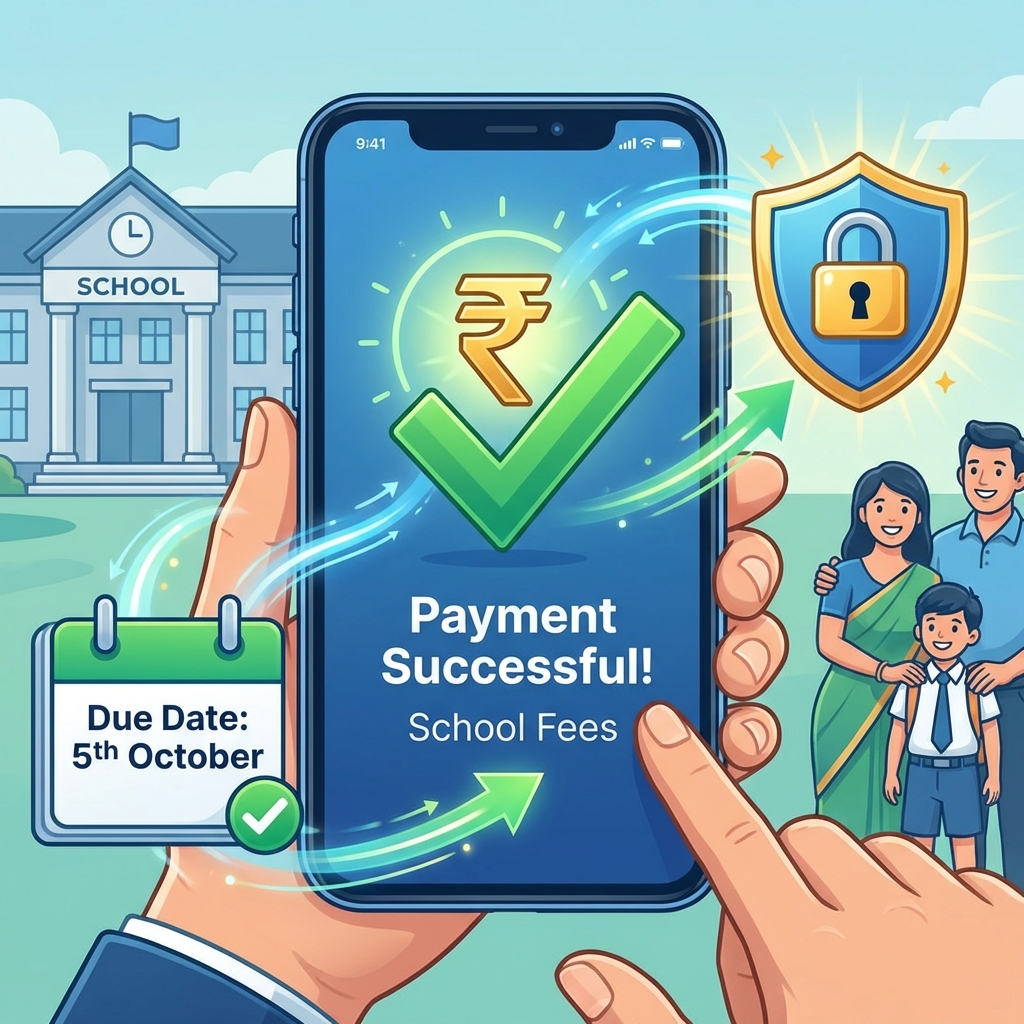
Fee collection is the lifeblood of MSME schools in India. Unlike government schools or large chains with corporate backing, small and medium private schools depend entirely on timely fee payments to pay teachers, maintain infrastructure, and stay operational. Yet most MSME schools struggle with 20-35% fee defaults at any given time.
This comprehensive guide covers proven strategies to improve fee collection rates from 65% to 90%+ while maintaining positive parent relationships—critical for schools where word-of-mouth drives enrollment.
What Is a Healthy Fee Collection Rate for Indian Schools?
A healthy fee collection rate for MSME schools in India is 85-95% within 15 days of the due date. Schools collecting below 80% face cash flow issues that impact teacher salaries and operations. Top-performing schools achieve 90%+ collection through a combination of convenient payment options, systematic reminders, and flexible policies that accommodate genuine hardship while discouraging habitual defaulters.
Fee Collection Benchmarks by School Type
| School Type | Average Collection Rate | Top Performer Rate | Collection Window |
|---|---|---|---|
| Premium Private (₹50,000+/year) | 90-95% | 98% | 7 days |
| Mid-Range Private (₹25-50K/year) | 75-85% | 92% | 15 days |
| Budget Private (₹10-25K/year) | 65-75% | 88% | 30 days |
| MSME Average (200-800 students) | 70-80% | 90% | 15-20 days |
The True Cost of Poor Fee Collection
For a 400-student MSME school with ₹3,000 monthly fee:
| Collection Rate | Monthly Revenue | Annual Impact |
|---|---|---|
| 70% (Poor) | ₹8.4 lakhs | ₹1.01 crore |
| 80% (Average) | ₹9.6 lakhs | ₹1.15 crore |
| 90% (Good) | ₹10.8 lakhs | ₹1.30 crore |
| Difference (70% → 90%) | ₹2.4 lakhs/month | ₹29 lakhs/year |
See how 5 real schools transformed their fee collection rates using these strategies.
Why Do Parents Default on School Fees?
Understanding why parents don't pay on time is essential for designing effective collection strategies. For MSME schools serving middle-class families, fee defaults typically fall into four categories: cash flow timing issues (40%), forgetfulness (30%), genuine financial hardship (20%), and deliberate avoidance (10%). Each requires a different approach.
Default Reason Analysis
1. Cash Flow Timing (40% of defaults)
- Salary credited on different dates than fee due date
- Seasonal income variation (business owners, farmers)
- Waiting for reimbursement from employer
Solution: Flexible due dates, installment options, alignment with common salary cycles
2. Forgetfulness (30% of defaults)
- Multiple children, multiple due dates
- Busy parents with demanding jobs
- Paper circulars lost or not seen
Solution: Multi-channel reminders (WhatsApp, SMS, app notifications), auto-reminders. See our 10 time-saving automation tips for school administrators for implementation details.
3. Genuine Hardship (20% of defaults)
- Job loss or salary cut
- Medical emergency in family
- Business failure or debt issues
Solution: Confidential hardship policy, extended payment plans, partial fee waiver consideration
4. Deliberate Avoidance (10% of defaults)
- Chronic defaulters who pay only when pressured
- Parents planning to shift schools
- Those who can pay but deprioritize school fees
Solution: Clear escalation policy, academic year restrictions, legal notice for extreme cases
How Can Schools Enable Online Fee Payments?
Online fee payment via UPI, credit/debit cards, and net banking is the single most impactful change for improving fee collection. Schools enabling online payments report 20-30% improvement in on-time collection. Parents overwhelmingly prefer digital payments—a 2025 survey found 78% of urban Indian parents would pay school fees online if the option existed.
Online Payment Options for MSME Schools
Option 1: Direct Payment Gateway (DIY)
Setup Razorpay or PayU directly:
- Cost: 2% per transaction (no monthly fee)
- Setup time: 3-5 days for merchant account
- Requirement: Business bank account, GST registration
- Limitation: Manual reconciliation, no integration
Option 2: School Software with Payment Integration
Use school management software with built-in payments:
- Cost: Software subscription + 2% transaction fee
- Setup time: 1-2 days (handled by vendor)
- Benefit: Auto-reconciliation, instant receipts, fee tracking
- Best for: Schools wanting full automation
Implementation Checklist
- Register for payment gateway merchant account
- Link school's current account for settlements
- Generate payment links per student (or use software)
- Communicate payment options to parents
- Display QR codes in office for UPI payments
- Train staff on reconciliation process
Parent Communication Template
Dear Parents,

[School Name] now offers ONLINE FEE PAYMENT!

Pay fees instantly via:
✅ UPI (Google Pay, PhonePe, Paytm)
✅ Credit/Debit Cards
✅ Net Banking

Benefits:
• Pay anytime, anywhere
• Instant digital receipt
• No more standing in queue

How to Pay:
1. Open parent app / Click payment link
2. Enter amount
3. Complete payment via preferred method
4. Receive instant receipt on WhatsApp

Payment Link: [Unique Link]
Amount Due: ₹[Amount]
Due Date: [Date]

For queries: [Office Number]

- [School Name] Administration
What Is the Best Fee Reminder Strategy?
The most effective fee reminder strategy uses multiple channels (WhatsApp, SMS, app notification) with escalating frequency as the due date approaches. Research shows 3-touch reminders at 7 days before, 2 days before, and on the due date achieve optimal results without annoying parents. Post-due date reminders should shift tone from informational to action-oriented.
Recommended Reminder Schedule
| Day | Channel | Message Tone | Content |
|---|---|---|---|
| D-7 (7 days before) | WhatsApp + App | Friendly reminder | Fee due date approaching, amount, payment link |
| D-2 (2 days before) | SMS + WhatsApp | Gentle nudge | Due date reminder, payment options |
| D-Day (Due date) | WhatsApp + App | Urgent | Last day to pay without late fee |
| D+3 (3 days after) | SMS + WhatsApp | Firm | Overdue notice, late fee applied |
| D+7 (7 days after) | Phone call | Personal | Understanding situation, payment plan |
| D+15 (15 days after) | Formal letter | Official | Written notice with consequences |
| D+30 (30 days after) | Meeting request | Serious | In-person discussion required |
Message Templates by Stage
D-7: Friendly Reminder
Dear [Parent Name],

A gentle reminder that [Student Name]'s fee of ₹[Amount] for [Month] is due on [Date].

Pay online: [Link]
Or visit school office.

Thank you!
- [School Name]
D+3: Overdue Notice
Dear [Parent Name],

[Student Name]'s fee of ₹[Amount] was due on [Date]. A late fee of ₹[Late Fee] will apply after [Grace Date].

Please clear the dues to avoid late charges.

Pay now: [Link]

- [School Name] Accounts
D+15: Formal Notice
Dear [Parent Name],

This is to formally notify you that [Student Name]'s fee of ₹[Amount] for [Month] remains unpaid despite multiple reminders.

Outstanding: ₹[Total with Late Fee]

Please visit the school office within 3 working days to discuss the payment. Continued non-payment may affect [Student Name]'s academic activities as per school policy.

Regards,
[Principal Name]
[School Name]
How Should Schools Handle Fee Defaulters?
Effective defaulter management balances firmness with empathy. MSME schools must collect fees to survive, but aggressive tactics damage reputation and parent relationships. The best approach is a clear, published policy applied consistently to everyone, with confidential provisions for genuine hardship cases approved by the principal.
Graduated Consequence Framework
Stage 1: Grace Period (1-7 days overdue)
- Automated reminders only
- No restrictions
- No late fee (or minimal)
Stage 2: Yellow Zone (8-15 days overdue)
- Late fee applied (typically ₹50-200)
- Personal phone call from accounts
- Continued automated reminders
Stage 3: Orange Zone (16-30 days overdue)
- Formal written notice
- Restriction from exam hall tickets (exam time only)
- Meeting request with parent
Stage 4: Red Zone (31+ days overdue)
- Student activities restricted
- Transfer Certificate hold
- Legal notice for amounts above ₹50,000
What NOT to Do
❌ Don't publicly shame students - Calling out children in class is illegal and unethical ❌ Don't deny education - The Right to Education Act protects students from being denied classroom attendance ❌ Don't use aggressive language - Maintains parent relationship and school reputation ❌ Don't apply policy inconsistently - Leads to accusations of favoritism
Hardship Policy Template
For genuine hardship cases, have a documented process:
- Parent submits written application explaining circumstances
- Principal reviews with confidentiality
- Options offered:
- Extended payment timeline (2-3 months)
- Installment plan without late fee
- Partial fee waiver (rare, for extreme cases)
- Sibling fee adjustment
- Agreement signed with clear payment schedule
- Regular follow-up on agreed timeline
What Fee Payment Options Should Schools Offer?
Schools should offer multiple payment options to accommodate different parent preferences and financial situations. The ideal mix includes lump sum annual payment (with discount), quarterly payments (most common), monthly payments (for budget-conscious families), and custom installments for hardship cases. Online and offline options should both be available.
Recommended Fee Structure
| Payment Option | Discount/Surcharge | Best For |
|---|---|---|
| Annual (one-time) | 5-10% discount | Financially stable families |
| Quarterly | Standard rate | Most families |
| Monthly | ₹100-200 processing fee | Budget-conscious families |
| Custom installment | Case-by-case | Hardship cases |
Payment Channel Mix (Optimal)
| Channel | Target Mix | Typical MSME Reality |
|---|---|---|
| Online (UPI/Cards) | 60-70% | 20-30% |
| Bank transfer/NEFT | 15-20% | 10-15% |
| Cash | 10-15% | 50-60% |
| Cheque | 5-10% | 10-20% |
Goal: Shift cash payments to online for better tracking and convenience.
Incentivizing Online Payments
- Convenience: 24/7 payment, no office visit needed
- Instant receipt: Digital receipt on WhatsApp/email
- Payment history: Parents can view all past payments
- Small incentive: ₹50-100 discount for online payment (optional)
- Default option: Make online the primary option in all communications
How Can Schools Reduce Fee Defaults Proactively?
Prevention is better than collection. Schools can significantly reduce defaults by setting realistic fee structures, communicating clearly before admission, and building systems that make payment easy and forgetting hard. The goal is making paying on time the path of least resistance for parents.
Proactive Strategies
1. Clear Fee Communication at Admission
Before admission, provide:
- Complete fee structure for the year
- All additional charges (transport, books, uniform, activities)
- Payment schedule with due dates
- Late fee policy
- Online payment options
2. Fee Calendar Distribution
At academic year start:
- Printed fee calendar with all due dates
- Add to parent app/portal
- Sync with Google Calendar (share link)
- WhatsApp group pinned message
3. Auto-Debit Option
Partner with banks to offer:
- Standing instruction (SI) for recurring payments
- NACH mandate for automatic deduction
- UPI Autopay for monthly fees
4. Parent Financial Counseling
For schools in lower-income areas:
- Help parents plan annual education budget
- Explain EMI calculators and planning tools
- Connect with education loan providers if needed
What Technology Should Schools Use for Fee Management?
Effective fee management requires technology that handles fee structure setup, payment tracking, receipt generation, reminder automation, and reporting. MSME schools should look for affordable cloud-based software with Razorpay/PayU integration, WhatsApp notifications, and a parent app for self-service payment and history access.
Essential Features Checklist
Fee Structure Management:
- Multiple fee heads (tuition, transport, books, etc.)
- Class-wise fee configuration
- Sibling discount automation
- Staff ward concession handling
- Mid-year admission pro-rata calculation
Payment Processing:
- Online payment gateway integration
- Cash/cheque receipt entry
- Payment reconciliation
- Receipt number auto-generation
- Duplicate receipt prevention
Reminder & Communication:
- Automated reminder scheduling
- WhatsApp/SMS integration
- Customizable message templates
- Delivery status tracking
Reporting:
- Daily collection report
- Outstanding/defaulter list
- Class-wise collection summary
- Payment method breakdown
- Year-on-year comparison
ManabiApp Fee Management
ManabiApp includes all features above, designed for MSME schools:
- Razorpay Integration: Money directly to your bank account
- WhatsApp Reminders: Parents actually read these
- Parent App: Fee payment, receipts, and history
- Auto Late Fee: Calculate and apply automatically
- Defaulter Reports: One-click list with contact details
How Should Schools Handle Cheque Bounces?
Cheque bounces (dishonoured cheques) require immediate action to recover funds and deter repeat occurrences. Under the Negotiable Instruments Act, issuing a bounced cheque is a criminal offense, but schools should use this as last resort after exhausting other options.
Bounced Cheque Process
Immediate Steps (Day 1-3):
- Record bounce with reason from bank
- Contact parent immediately by phone
- Request alternative payment (cash/online) within 48 hours
- Apply bounced cheque charges (typically ₹200-500)
If Not Resolved (Day 4-15):
- Send formal notice citing Section 138 of NI Act
- Notice must be sent within 30 days of bounce
- Give 15 days to make payment
- Document all communication
Legal Action (After 15 days of notice):
- File complaint in court if payment not received
- Cheque bounce is a criminal offense (up to 2 years imprisonment)
- Schools rarely need to go this far—notice usually works
Prevention Strategies
- Encourage online payments over cheques
- Verify cheque details before accepting
- For large amounts, request bank guarantee or DD
- Maintain list of parents with previous bounces—require alternative payment
What Are Common Fee Collection Mistakes to Avoid?
MSME schools often make avoidable mistakes that hurt collection rates and parent relationships. The most common errors include inconsistent policy enforcement, poor communication, limited payment options, and reactive rather than proactive approaches to defaults.
Top 10 Mistakes
| Mistake | Impact | Solution |
|---|---|---|
| No online payment | 20-30% lower collection | Enable Razorpay/PayU |
| Manual reminders only | 40% forget to pay | Automate reminders |
| Single due date | Cash flow mismatch | Offer multiple options |
| Public shaming of students | Legal issues, reputation damage | Never do this |
| Inconsistent policy | Parent complaints, unfairness | Document and apply uniformly |
| No late fee | No urgency to pay | Small late fee motivates |
| Aggressive collection | Parent withdrawal, bad word-of-mouth | Professional, empathetic approach |
| No payment confirmation | Disputes, confusion | Instant digital receipts |
| Year-end only collection push | Large defaults accumulate | Regular monthly follow-up |
| No hardship provision | Lose good families | Confidential accommodation policy |
Fee Collection Calendar for MSME Schools
Annual Fee Collection Rhythm
| Month | Focus | Action |
|---|---|---|
| March-April | New academic year fees | Admission fee + Q1 collection drive |
| May | Annual fee deadline | Early bird discount deadline |
| June | Q1 follow-up | First defaulter outreach |
| July-August | Q2 collection | Reminder cycle |
| September | Mid-year review | Hardship case review |
| October-November | Q3 collection | Diwali timing adjustment |
| December | Calendar year-end | Statement of fees paid (for IT filing) |
| January-February | Q4 collection | Pre-exam fee clearance |
| March | Year-end closure | TC holds for unpaid, next year planning |
Monthly Collection Routine
Week 1: Send fee reminders for upcoming due date Week 2: Due date + 3-5 day grace period Week 3: Follow up on defaults (calls, messages) Week 4: Review collection rate, escalate chronic defaulters
Summary: Fee Collection Best Practices Checklist
Technology
- Enable online payments (UPI, cards, net banking)
- Implement school management software
- Automate reminder system
- Provide parent app/portal
Policy
- Document clear fee structure and due dates
- Establish graduated late fee policy
- Create hardship accommodation process
- Define consequence framework
Communication
- Multi-channel reminders (WhatsApp, SMS, app)
- Consistent, professional tone
- Personal outreach for overdue accounts
- Clear payment instructions
Operations
- Daily collection tracking
- Weekly defaulter review
- Monthly collection rate analysis
- Quarterly policy review
Ready to Improve Your Fee Collection?
ManabiApp helps MSME schools achieve 85-90% fee collection rates:
- Online Payments: Razorpay integration with instant receipts
- WhatsApp Reminders: Automated, scheduled, effective
- Parent App: Self-service payment and history
- Defaulter Management: Reports, tracking, and escalation tools
Start Your 14-Day Free Trial — See the difference in your next collection cycle.
Or Book a Demo to discuss your school's specific fee collection challenges.
Frequently Asked Questions
What is a good fee collection rate for Indian schools?
A healthy fee collection rate for MSME schools in India is 85-95% within 15 days of the due date. Schools collecting below 80% face cash flow issues affecting teacher salaries and operations. Top performers achieve 90%+ through convenient payment options and systematic reminders.
How can schools enable online fee payments?
Schools can enable online payments by integrating Razorpay or PayU directly (2% per transaction) or using school management software with built-in payment processing. Setup takes 3-5 days and requires a business bank account and GST registration.
What is the best fee reminder strategy for schools?
The most effective strategy uses multiple channels (WhatsApp, SMS, app) with escalating frequency: 7 days before, 2 days before, and on due date. Post-due reminders should shift from informational to action-oriented with consequences clearly stated.
How should schools handle fee defaulters?
Use a graduated approach: grace period with reminders only, then late fees at 8-15 days, exam restrictions at 16-30 days, and formal notices after 30 days. Never publicly shame students or deny classroom attendance, which violates the RTE Act.
Ready to Modernize Your School?
ManabiApp helps 500+ Indian schools save time, collect more fees, and keep parents happy. Start your free trial today.